- The Prohuman
- Posts
- OpenAI’s GPT 5.5 targets longer tasks
OpenAI’s GPT 5.5 targets longer tasks
Plus: Add another story headline


Rimsha Bhardwaj, Hasan Toor & Ihtesham Haider
April 24, 2026
In partnership with

Hello, Prohuman
Today, we will talk about these stories:
OpenAI pitches GPT-5.5 for real work
DeepSeek puts V4 into the open
Google pushes AI onto the phone
Your prompts are leaving out 80% of what you're thinking.
When you type a prompt, you summarize. When you speak one, you explain. Wispr Flow captures your full reasoning — constraints, edge cases, examples, tone — and turns it into clean, structured text you paste into ChatGPT, Claude, or any AI tool. The difference shows up immediately. More context in, fewer follow-ups out.
89% of messages sent with zero edits. Used by teams at OpenAI, Vercel, and Clay. Try Wispr Flow free — works on Mac, Windows, and iPhone.
GPT-5.5 is about staying with the task
Image Credits: OpenAI
OpenAI says GPT-5.5 can keep working after the easy part ends.
The model is rolling out to Plus, Pro, Business and Enterprise users in ChatGPT and Codex, with API access promised soon. OpenAI says it reaches 82.7% on Terminal-Bench 2.0 and keeps GPT-5.4-level latency while using fewer tokens on Codex tasks.
That is the pitch. My read is that OpenAI is trying to move the conversation away from chat quality and toward whether the model can finish messy computer work with fewer handoffs. The stronger signal is Codex, where the model is being judged on fixing code, making files and moving across tools like a person at a desk.
The price is higher. That will matter less if teams believe GPT-5.5 saves hours on work that currently sits open across tabs, docs and Slack threads.
The open question is how often it holds up outside OpenAI’s best examples.
DeepSeek wants V4 judged by builders

Image Credits: CNBC
Friday morning, DeepSeek put V4 in developers’ hands.
The Hangzhou startup released a preview of its long-awaited V4 model, with open source access and pro and flash versions.
The company says V4 is stronger on agent tasks, knowledge processing and inference, and it works with tools like Claude Code and OpenClaw.
This matters because DeepSeek keeps pushing on cost, access and usefulness at the same time, which is exactly what made R1 uncomfortable for U.S. AI leaders.
My read is that V4 does not need to shock markets the way R1 did to keep pressure on OpenAI, Google, Alibaba and ByteDance.
The bigger signal is that China’s AI race is moving from benchmark headlines toward developer adoption and workflow fit. Open source gives V4 a wider test bench.
The question is whether developers actually stay after the preview.
Google wants phone AI to feel usable
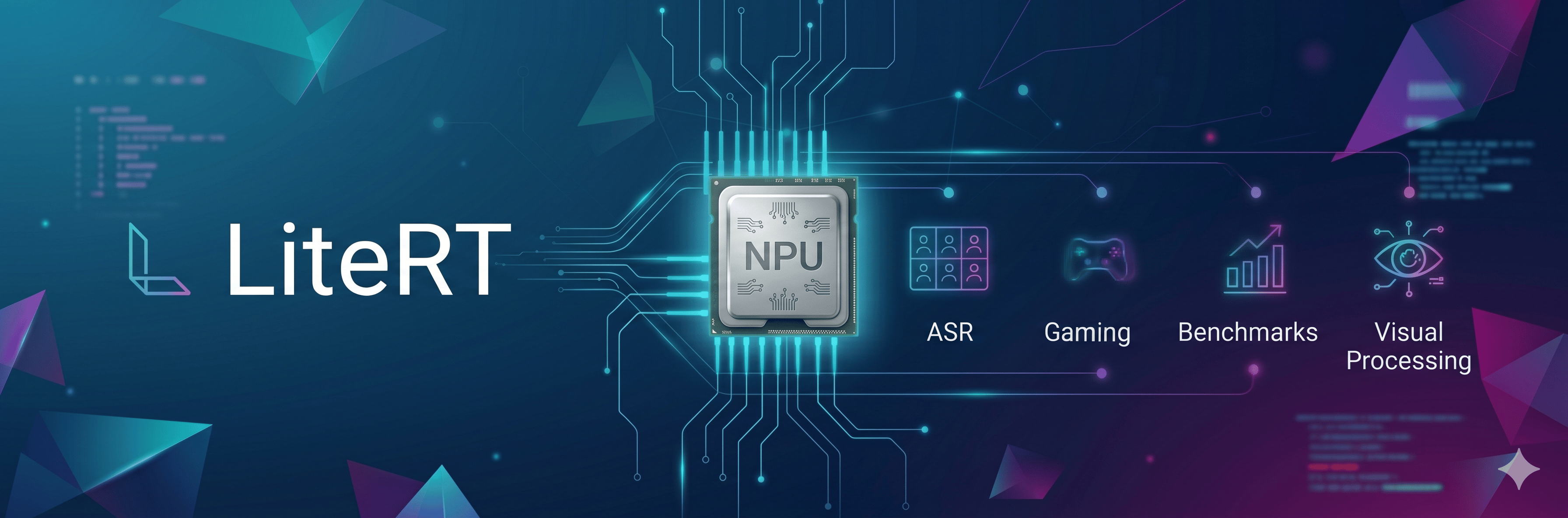
Image Credits: Google
A warm phone during a video call is the problem Google is trying to solve.
Google says LiteRT now gives developers a cleaner way to run AI models on device using NPUs across phones, desktops and edge hardware.
The company points to Google Meet running a segmentation model 25x larger than before, Epic hitting up to 30 FPS for MetaHuman facial animation, and Argmax seeing more than 2x speedup moving from GPU to NPU.
That part matters. My read is that this is less about flashy AI features and more about whether developers can ship them without draining batteries or fighting every chip vendor. Battery is the constraint.
If LiteRT works as advertised, more AI features can run locally, with lower latency and fewer cloud calls. The 100-plus phone benchmark portal is also useful because developers need real device data before they trust this in production.
The open question is how many app teams will actually build around NPUs now.
Covers emerging technology, AI models, and the people building the next layer of the internet. |  Founder |
Writes about how new interfaces, reasoning models, and automation are reshaping human work. |  Founder |
Free Guides
Explore our free guides and products to get into AI and master it.
All of them are free to access and would stay free for you.
Feeling generous?
You know someone who loves breakthroughs as much as you do.
Share The Prohuman it’s how smart people stay one update ahead.