- The Prohuman
- Posts
- OpenAI brings ads to free tier
OpenAI brings ads to free tier
Plus: What New Jersey’s NVIDIA deal is really about


Rimsha Bhardwaj, Hasan Toor & Ihtesham Haider
January 17, 2026
In partnership with

Hello, Prohuman
Today, we will talk about these stories:
ChatGPT is testing ads. Here’s the real change
New Jersey bets $25M on AI with NVIDIA
Why CISOs worry about free AI
Introducing the first AI-native CRM

Connect your email, and you’ll instantly get a CRM with enriched customer insights and a platform that grows with your business.
With AI at the core, Attio lets you:
Prospect and route leads with research agents
Get real-time insights during customer calls
Build powerful automations for your complex workflows
Join industry leaders like Granola, Taskrabbit, Flatfile and more.
Ads are coming to ChatGPT
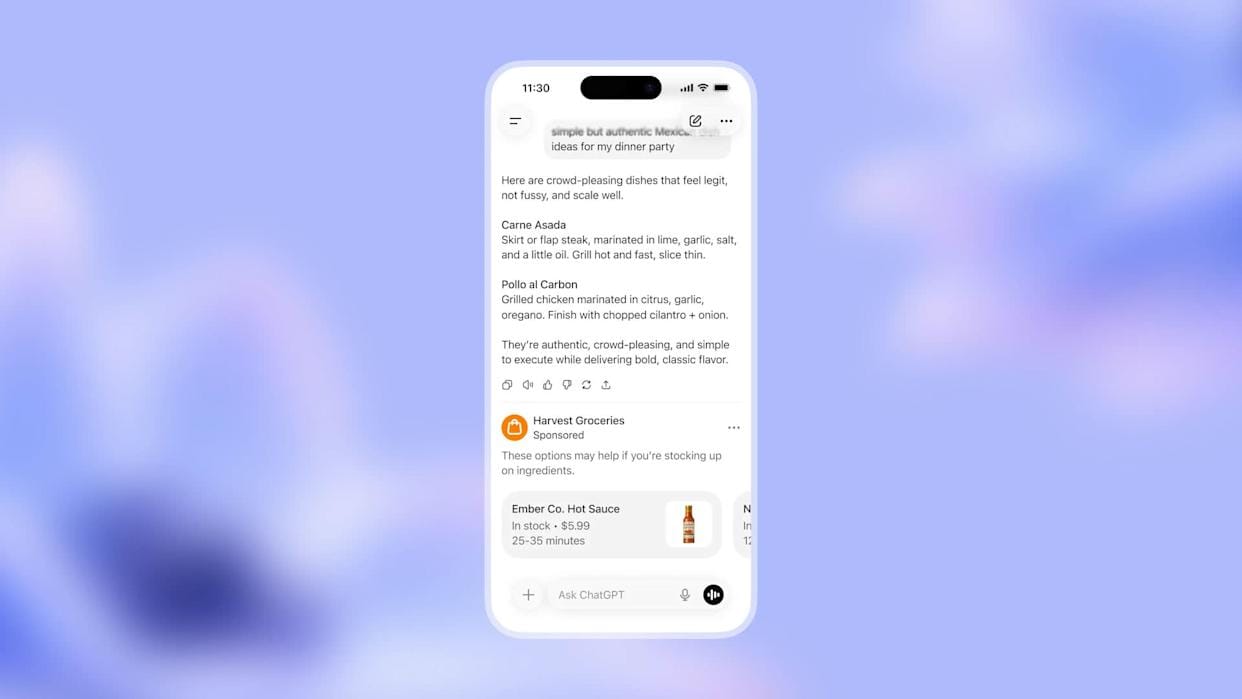
Image Credits: Open AI
OpenAI is about to put ads inside ChatGPT answers.
Starting in the coming weeks, OpenAI will test ads for logged-in adults in the U.S. on the free and $8/month Go tier, with ads shown at the bottom of responses. Pro, Business, and Enterprise accounts stay ad-free, and OpenAI says ads will not affect answers, won’t use conversation data, and won’t appear near health, mental health, or politics.
This is less about advertising and more about scale. Running ChatGPT globally, in 171 countries, with images, files, and memory costs real money, and subscriptions alone were never going to cover everyone who uses it at 10 p.m. on a phone screen.
The bigger test is trust. Once ads exist in the interface, OpenAI has to prove that “separate and labeled” stays true when revenue pressure shows up.
If this works, ChatGPT becomes the first mainstream consumer AI that feels more like YouTube than a SaaS tool. If it slips, people will assume answers are tilted, even when they are not.
The question is whether users believe the line between advice and ads can actually hold.
Free AI is a security tradeoff

Free AI tools make security teams uneasy for a reason.
This piece argues that many free AI tools lack the security controls enterprises need, especially around non-human identities like API keys, tokens, and machine credentials. As cloud use grows, these machine identities now outnumber humans and quietly control access across DevOps, SOCs, healthcare, and finance systems.
The article’s core point is practical. AI risk is not only about models or data leaks, it is about the invisible credentials that let systems talk to each other at 2 a.m. without oversight. Free tools often skip the hard parts like lifecycle management, auditing, and anomaly detection because those features are expensive and unglamorous.
There is also a framing issue. Calling this “AI security” can distract from the basics of identity and access control that teams already struggle to manage.
As more companies plug AI into production workflows, unmanaged machine identities become the soft underbelly attackers will keep probing. CISOs will push harder toward paid, controlled platforms, even if teams prefer free tools.
The real question is how much risk organizations are quietly accepting just to save on licensing costs.
New Jersey makes AI a state project

Image Credits: New Jersey Business Magazine
Phil Murphy signed an AI deal on his way out the door.
New Jersey’s outgoing governor signed an MOU with NVIDIA to support AI research, education, and workforce training across universities, community colleges, and a state-run AI hub. The state is backing it with $25 million for a higher education supercomputer, framed as shared infrastructure for students, researchers, and startups.
This reads less like a tech partnership and more like an industrial policy move at the state level. New Jersey wants AI capacity inside public institutions, not just rented from cloud vendors, and NVIDIA is the obvious hardware partner if you are serious about that.
There is also timing here. Locking this in before the inauguration makes it harder for the next administration to quietly move on.
Other states have done similar deals, but this one ties education, workforce, and compute together in a single package. If the supercomputer actually gets used, this could shape how public-sector AI talent gets trained locally instead of leaving the state.
The open question is whether this becomes shared infrastructure or another ribbon-cutting that fades once the press conference lights go out.
Prohuman team
Covers emerging technology, AI models, and the people building the next layer of the internet. |  Founder |
Writes about how new interfaces, reasoning models, and automation are reshaping human work. |  Founder |
Free Guides
Explore our free guides and products to get into AI and master it.
All of them are free to access and would stay free for you.
Feeling generous?
You know someone who loves breakthroughs as much as you do.
Share The Prohuman it’s how smart people stay one update ahead.