- The Prohuman
- Posts
- Now easily detect AI videos in Gemini
Now easily detect AI videos in Gemini
Plus: Meta is building its own video model


Rimsha Bhardwaj, Hasan Toor & Ihtesham Haider
December 19, 2025
Hello, Prohuman
Today, we will talk about these stories:
Google adds AI video checks to Gemini
Meta’s next AI bets: Mango and Avocado
People are uninstalling Windows AI
Last Time the Market Was This Expensive, Investors Waited 14 Years to Break Even

In 1999, the S&P 500 peaked. Then it took 14 years to gradually recover by 2013.
Today? Goldman Sachs sounds crazy forecasting 3% returns for 2024 to 2034.
But we’re currently seeing the highest price for the S&P 500 compared to earnings since the dot-com boom.
So, maybe that’s why they’re not alone; Vanguard projects about 5%.
In fact, now just about everything seems priced near all time highs. Equities, gold, crypto, etc.
But billionaires have long diversified a slice of their portfolios with one asset class that is poised to rebound.
It’s post war and contemporary art.
Sounds crazy, but over 70,000 investors have followed suit since 2019—with Masterworks.
You can invest in shares of artworks featuring Banksy, Basquiat, Picasso, and more.
24 exits later, results speak for themselves: net annualized returns like 14.6%, 17.6%, and 17.8%.*
My subscribers can skip the waitlist.
*Investing involves risk. Past performance is not indicative of future returns. Important Reg A disclosures: masterworks.com/cd.
You can now check Google-made video
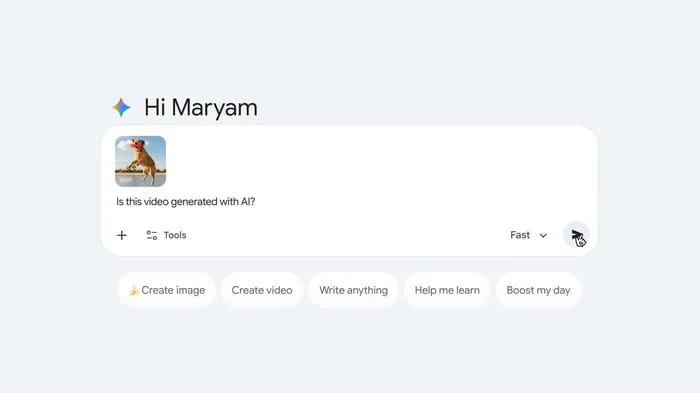
Image Credits: Google
You can test a video yourself. It takes a minute.
Google added a video verification feature to the Gemini app that scans uploaded clips for its SynthID watermark across audio and visuals.
Files can be up to 100 MB and 90 seconds, and the tool works anywhere the Gemini app is available.
This matters because Google is finally putting a consumer-facing check where the content actually circulates, instead of leaving verification to labs and press releases. I like that the result is specific, down to timestamps like 10 to 20 seconds, which makes the answer feel inspectable instead of hand-wavy.
Creators will start seeing questions about provenance the same way they see questions about edits or filters today. Platforms that skip this kind of tooling will look careless once people get used to tapping upload, hearing their phone buzz, and getting a clear answer.
What happens when the watermark is missing and the video still feels off?
Meta is coming for AI video

Meta is naming its models after fruit now.
The Wall Street Journal reports that Meta is developing a new image and video model called Mango, alongside a text-focused language model named Avocado. Alexandr Wang discussed both in an internal Q&A, with releases expected in the first half of 2026, as AI video tools like Google Veo 3 and Runway keep improving.
This tells me Meta does not want to rent its future from other labs when it comes to video and generative media. Video is where Meta already lives at scale, and building its own model is a defensive move as much as a creative one.
If Mango works well, Meta can bake generative video directly into Instagram, Facebook, and ads without relying on outside platforms.
That raises the pressure on rivals to ship not just flashy demos but models that survive real feeds, real creators, and endless scrolling at night.
When AI video becomes native to social apps, will users even notice where the clips came from anymore?
Someone automated removing Windows AI

People are writing scripts to make Windows quieter.
A Hackaday write-up points to a GitHub project called Remove Windows AI that disables Copilot, Recall, AI Actions, and related features in Windows 11 25H2. It runs as an admin PowerShell script, touches the registry, blocks Windows Update from restoring packages, and offers a simple GUI if you do not want a console window staring back at you at midnight.
This exists because Microsoft bundled a lot of AI features without giving users a clean, centralized off switch.
The fact that the script has to actively fight Windows Update says more about Microsoft’s priorities than about power users being stubborn. Tools like this normalize the idea that AI features are optional system mods, not baseline OS requirements. As more people install Windows 11 under pressure, projects like this will age alongside the OS, breaking and getting fixed with each release.
If removing AI takes a GitHub repo and admin rights, what does “user control” actually mean now?
Prohuman team
Covers emerging technology, AI models, and the people building the next layer of the internet. |  Founder |
Writes about how new interfaces, reasoning models, and automation are reshaping human work. |  Founder |
Free Guides
Explore our free guides and products to get into AI and master it.
All of them are free to access and would stay free for you.
Feeling generous?
You know someone who loves breakthroughs as much as you do.
Share The Prohuman it’s how smart people stay one update ahead.