- The Prohuman
- Posts
- Leaders are underestimating AI change
Leaders are underestimating AI change
Plus: Google bets deeper on Intel chips


Rimsha Bhardwaj, Hasan Toor & Ihtesham Haider
April 13, 2026
In partnership with

Hello, Prohuman
Today, we will talk about these stories:
The hard part of agentic AI
CPUs are back in the AI race
Banks are testing a risky AI model

Tech moves fast, but you're still playing catch-up?
That's exactly why 200K+ engineers working at Google, Meta, and Apple read The Code twice a week.
Here's what you get:
Curated tech news that shapes your career - Filtered from thousands of sources so you know what's coming 6 months early.
Practical resources you can use immediately - Real tutorials and tools that solve actual engineering problems.
Research papers and insights decoded - We break down complex tech so you understand what matters.
All delivered twice a week in just 2 short emails.
AI org charts are getting real

This is slower than people think.
The push to build “Frontier Firms” is picking up, with leaders designing teams where humans and AI agents work together and move faster. Microsoft’s framing is catching on, and events like AgentCon show companies are already planning structural changes.
Most of this advice sounds obvious, but the execution is where companies will stall, especially when decisions get messy and no one wants to own the outcome of an AI call. The 70% productivity lift from human-agent teams is real, but only if workflows are redesigned from the ground up, not patched together.
You can hear the hum of office chatter shifting as teams test these systems in real time, and it’s uneven. Some groups will move quickly, others will quietly avoid it.
The gap won’t be tech. It will be accountability. Who actually takes the fall when the AI is wrong?
AI demand is shifting back to CPUs
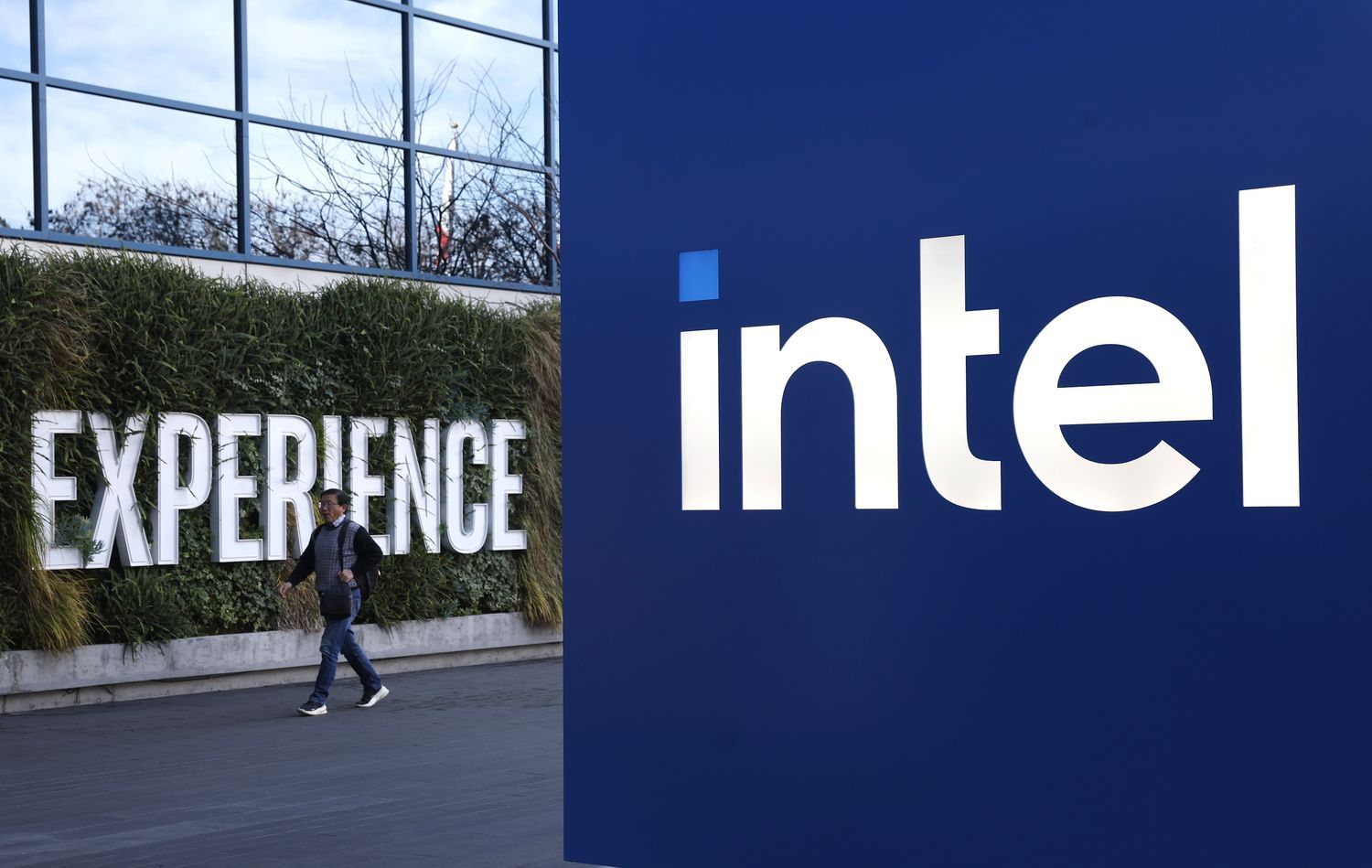
Image Credits: Investopedia
The bottleneck is moving.
Google just expanded its partnership with Intel, doubling down on Xeon CPUs and co-developing custom IPUs for its cloud infrastructure.
For the past two years, all the attention sat on GPUs, but this points to a quieter constraint: actually running AI systems at scale once they’re built. CPUs and these support chips handle inference and data flow, and there’s now a real shortage building there.
This feels like a correction. Training models got the spotlight, but operating them is where costs and complexity stack up fast, especially inside massive cloud systems.
You can picture rows of servers, fans running constant, and most of the work now shifting to keeping models responsive, not just training them.
If CPUs become the next choke point, pricing power and leverage shift again. Are we about to see a second chip race, just less visible this time?
Banks are quietly testing a dangerous AI model

Image Credits: New York Times
This is moving faster than expected.
U.S. officials reportedly urged major banks like JPMorgan, Goldman Sachs, and Citi to test Anthropic’s new Mythos model, which is unusually good at finding security vulnerabilities.
The strange part is the timing. Anthropic is in an active dispute with the same administration now pushing its model into financial institutions, while also limiting access because of how powerful it is.
This looks less like careful rollout and more like pressure testing in a live environment where the downside is real. Banks don’t experiment lightly, especially with tools that can expose weaknesses across critical systems.
You can imagine late-night security teams running scans, watching logs scroll, unsure how much to trust what they’re seeing.
If this works, it becomes standard fast. If it doesn’t, the fallout won’t stay contained. Who decides when a model is too capable to deploy?
Prohuman team
Covers emerging technology, AI models, and the people building the next layer of the internet. |  Founder |
Writes about how new interfaces, reasoning models, and automation are reshaping human work. |  Founder |
Free Guides
Explore our free guides and products to get into AI and master it.
All of them are free to access and would stay free for you.
Feeling generous?
You know someone who loves breakthroughs as much as you do.
Share The Prohuman it’s how smart people stay one update ahead.