- The Prohuman
- Posts
- How to build powerful AI agents
How to build powerful AI agents
Plus: Google smart glasses are here, Claude is back in Slack, and 12 advanced AI agents you can copy right now


Rimsha Bhardwaj, Hasan Toor & Ihtesham Haider
December 09, 2025
Hello, Prohuman
Today, we will talk about these stories:
Coding assistants move to where teams talk
The 2026 swing at consumer AI wearables
A $4.5B seed round that bends belief
You don’t need another productivity hack, You need a system that works without you.

It started with burnout.
Emails piling up. Meetings double-booked. Leads slipping through the cracks. Content deadlines missed.
You weren’t lazy. You were just doing everything.
Then one day, you discovered AI Agents.
You built one in a single afternoon. No code. No tech stress. Just a simple, guided system.
Now?
📩 Your emails reply themselves.
📅 Meetings get scheduled before you even look.
📞 Leads get followed up automatically.
📝 Content? Already posted.
While you sleep, walk your dog, or sip coffee — your AI agents work.
It’s not a dream.
It’s a 3-hour masterclass.
Coding help is leaving the IDE and entering Slack
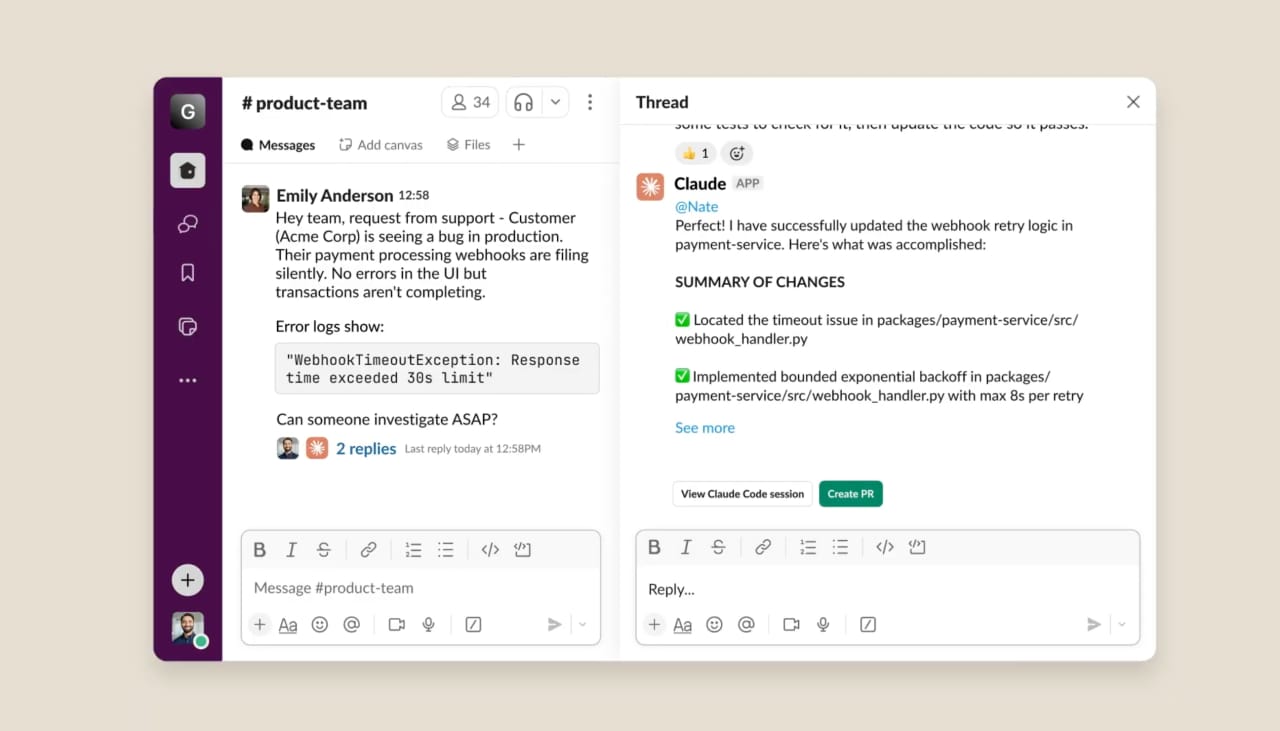
Image Credits: Anthropic
The change arrives like a soft keyboard tap in a quiet channel.
Anthropic is rolling out Claude Code in Slack, a beta that lets developers spin up full coding sessions from ordinary threads using context like bug reports or feature requests. The assistant chooses repositories, posts updates, and drops links to pull requests without leaving chat.
This move signals a deeper pivot because the battleground is no longer raw model power but the place where work already flows, and Slack sits at the center of engineering chatter for thousands of teams. Competitors see the same opening, from Cursor’s thread-based drafts to GitHub Copilot’s chat-driven pull requests.
As these agents burrow into workplace tools, the line between conversation and execution gets thin, and that raises new pressure on access controls since repository permissions and audit trails now stretch across two platforms. One outage in either system could stall a sprint that once lived entirely on a laptop.
The first time Claude tags a repo from a stray message thread, teams will feel the shift.
Google readies its first AI glasses for 2026

Image Credits: Google
The return of smart glasses lands with the quiet click of a suitcase latch before dawn.
Google says its first AI glasses will ship in 2026, starting with an audio pair built around Gemini and a second line with an in-lens display that can surface directions, translations, and other quick cues. Hardware partners range from Samsung to Gentle Monster to Warby Parker, which disclosed a $150 million tie-in earlier this year.
The company is trying to regain ground after Meta’s Ray-Ban line surprised the market, and that timing forces Google to lean on Android XR and a broader ecosystem instead of a single hero device. One sign of the shift is how openly Sergey Brin talks about past missteps, from price shocks to supply chain gaps.
If Meta keeps its current pace, the 2026 window could feel tight because expectations for display-class wearables are rising fast as users get used to on-lens prompts and instant captures. Even Snap and Alibaba are now shaping the edges of this niche.
Somewhere in that mix is the old Google Glass shadow, still trailing the company as it moves toward another launch.
A two month startup just priced like a veteran
Image Credits: Bloomberg
The number hits like a metal door slamming shut in a quiet hallway.
A two month old outfit called Unconventional AI pulled in $475 million at a $4.5 billion valuation, a seed round backed by Andreessen Horowitz, Lightspeed, Lux, DCVC, Databricks, and even Jeff Bezos. Rao, fresh from Databricks, put in $10 million himself.
Investors are treating the quest for a more energy efficient AI computer as a race where time is already gone, and a team with deep hardware and systems roots can skip the usual calendar of proof. One early signal is the mix of backers, which reads like a late stage syndicate arriving far too early.
This kind of pricing pressures every other hardware hopeful because expectations now shift to demonstrations that can justify valuations usually tied to years of shipping product. In the background, you can almost hear GPU depreciation clocks ticking as incumbents brace for new architectures.
Still, the speed of this bet says more about investor fear than certainty, and that tension will follow the team into every lab test.
Prohuman team
Covers emerging technology, AI models, and the people building the next layer of the internet. |  Founder |
Writes about how new interfaces, reasoning models, and automation are reshaping human work. |  Founder |
Free Guides
Explore our free guides and products to get into AI and master it.
All of them are free to access and would stay free for you.
Feeling generous?
You know someone who loves breakthroughs as much as you do.
Share The Prohuman it’s how smart people stay one update ahead.