- The Prohuman
- Posts
- Google turns design into prompts
Google turns design into prompts
Plus: Snowflake moves into AI agents


Rimsha Bhardwaj, Hasan Toor & Ihtesham Haider
March 19, 2026
In partnership with

Hello, Prohuman
Today, we will talk about these stories:
Design tools start acting like agents
A startup wants prompts to replace software
SnowWork connects data to action
When it all clicks.

Why does business news feel like it’s written for people who already get it?
Morning Brew changes that.
It’s a free newsletter that breaks down what’s going on in business, finance, and tech — clearly, quickly, and with enough personality to keep things interesting. The result? You don’t just skim headlines. You actually understand what’s going on.
Try it yourself and join over 4 million professionals reading daily.
Design moves from canvas to conversation
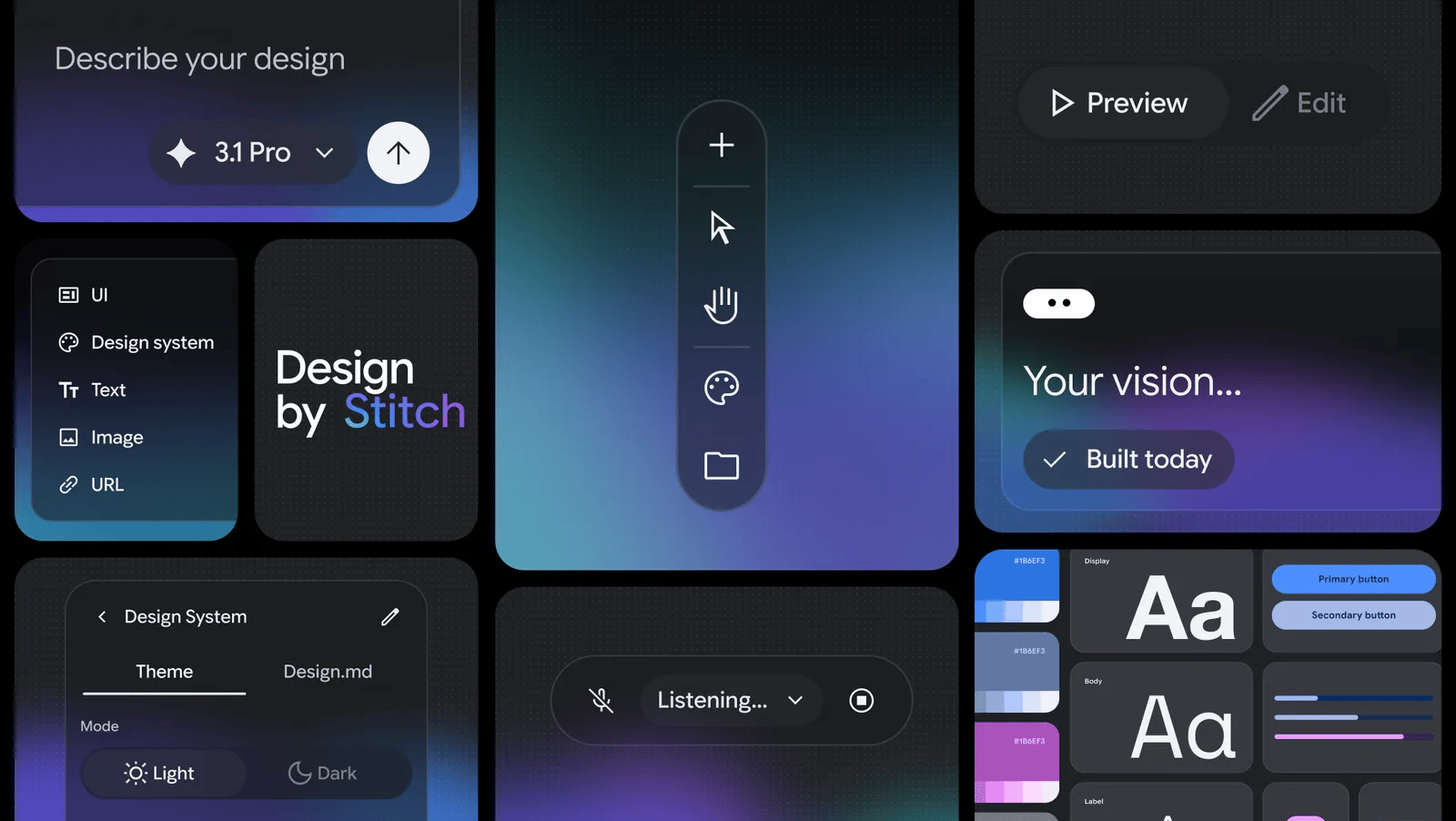
Image Credits: Google Keyboard
Google wants you to design apps by talking.
Stitch now turns natural language into full UI flows, with an infinite canvas, a design agent, and voice input that updates screens in real time.
It can generate interactive prototypes instantly, map user journeys from clicks, and export into tools like AI Studio and Antigravity, with its SDK already showing 2.4k stars.
This shifts design from careful planning into rapid exploration where ideas get tested as soon as they are described, often before anyone draws a wireframe.
The real change is how early decisions get made, because the tool pushes teams to react to working screens instead of debating static mockups.
Design just sped up. This will change workflows.
Expect more founders shipping rough but functional products in hours, and fewer handoffs between design and engineering as those boundaries blur inside one tool.
On a bright laptop screen late at night, you can click “Play” and watch a full flow that didn’t exist ten minutes earlier.
If design starts this fast, what still needs a specialist?
Enterprise software tries to disappear
Image Credits: Eragon
One prompt can onboard a new customer and spin up software.
Eragon, a startup valued at $100 million after raising $12 million, is building an AI system that replaces tools like Salesforce and Jira with a single prompt interface.
It connects to company data, assigns credentials, generates dashboards, and runs workflows automatically, all inside a chat-style system deployed in a company’s own cloud.
The pitch is simple: stop navigating software and just ask for outcomes, which sounds efficient but shifts a lot of control into systems that are still hard to audit.
The demo works, but the moment you think about edge cases like invoices or access permissions, the risks become obvious and expensive.
This is a big claim. It’s also early.
If this works, software buying changes from picking tools to picking agents trained on your internal data, which companies would own and treat like assets.
On a bright afternoon in a San Francisco loft, the demo runs smoothly on a few Mac minis, but scaling that reliability across real operations is a different test.
How much of your company would you trust to a prompt?
Snowflake wants AI to do the work
Image Credits: Snowflake
Snowflake is moving from data access to task execution.
Its new platform, SnowWork, lets users ask for things like a pitch deck and get outputs built from company data across systems, including emails and workflows.
The product is in research preview, building on earlier AI tools, with 9,100 of Snowflake’s 13,300 customers already using some form of its AI features.
This is a direct response to the pressure on SaaS companies, pushing them to prove they can turn data into finished work instead of just dashboards.
The key difference is control, since Snowflake is betting that AI grounded in governed internal data will be more useful than generic agents pulling from loose sources.
Something is shifting. The interface is getting thinner.
If this works, teams may stop switching between tools and instead rely on a single system that pulls data and completes tasks in one step.
In a quiet office with rows of cubicles, the change looks small at first, just another prompt box, but the output replaces hours of manual coordination.
If data platforms start doing the work, what happens to the apps built on top of them?
Prohuman team
Covers emerging technology, AI models, and the people building the next layer of the internet. |  Founder |
Writes about how new interfaces, reasoning models, and automation are reshaping human work. |  Founder |
Free Guides
Explore our free guides and products to get into AI and master it.
All of them are free to access and would stay free for you.
Feeling generous?
You know someone who loves breakthroughs as much as you do.
Share The Prohuman it’s how smart people stay one update ahead.