- The Prohuman
- Posts
- Google makes AI literacy push in schools
Google makes AI literacy push in schools
Plus: Spotify expands AI playlist tool


Rimsha Bhardwaj, Hasan Toor & Ihtesham Haider
February 24, 2026
In partnership with

Hello, Prohuman
Today, we will talk about these stories:
AI users refine more than they delegate
Gemini training goes national for educators
Spotify leans further into AI music
Ship the message as fast as you think

Founders spend too much time drafting the same kinds of messages. Wispr Flow turns spoken thinking into final-draft writing so you can record investor updates, product briefs, and run-of-the-mill status notes by voice. Use saved snippets for recurring intros, insert calendar links by voice, and keep comms consistent across the team. It preserves your tone, fixes punctuation, and formats lists so you send confident messages fast. Works on Mac, Windows, and iPhone. Try Wispr Flow for founders.
Iteration separates fluent AI users
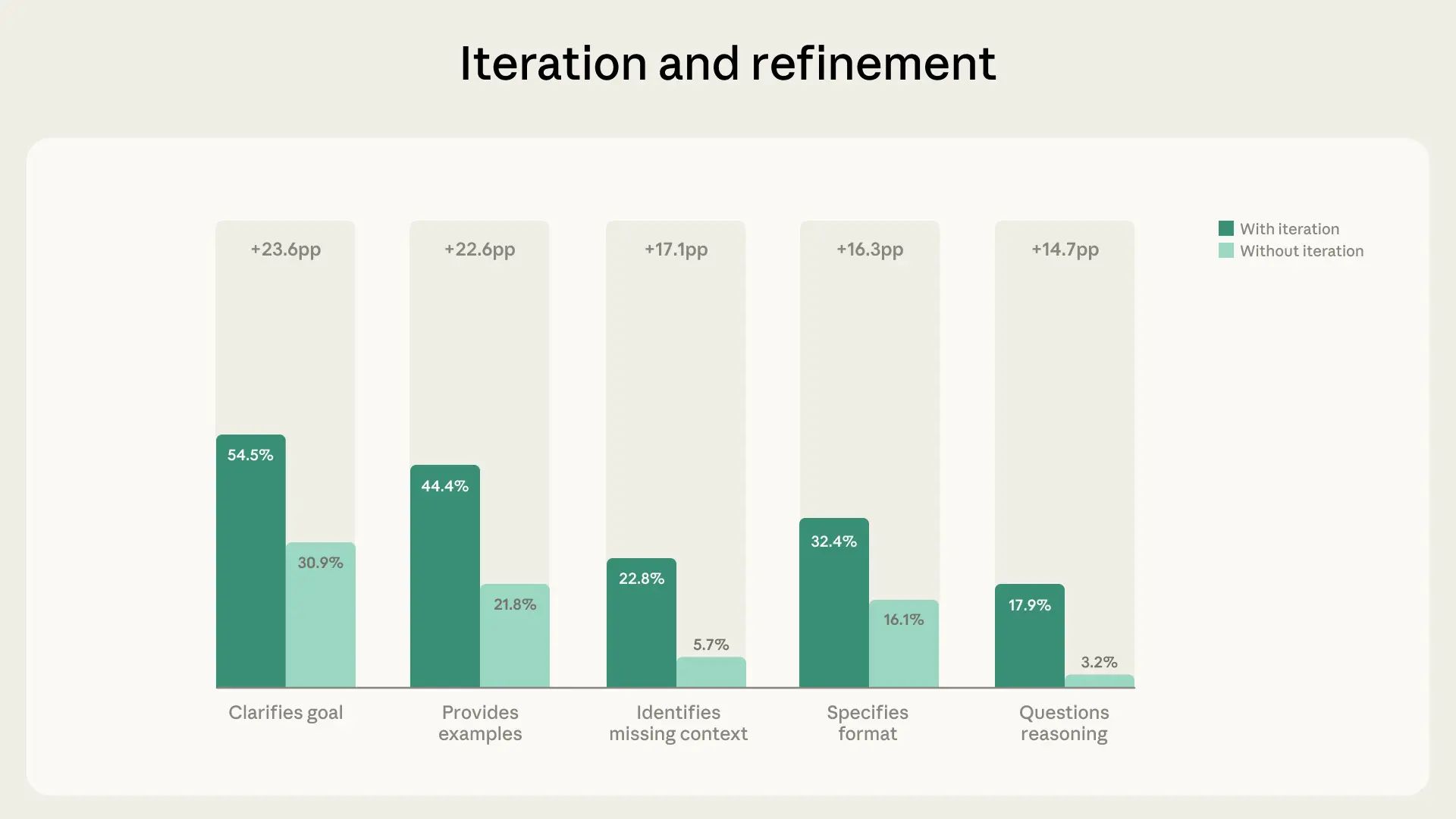
Image Credits: Anthropic
People who stick with the conversation use AI better.
Anthropic analyzed 9,830 multi-turn Claude conversations from one week in January 2026 to measure 11 observable “AI fluency” behaviors. 85.7% included iteration and refinement, and those chats showed 2.67 additional fluency behaviors on average, about double the 1.33 in shorter exchanges.
That tracks with what I see. The people getting real value treat the first answer as a draft and keep going, the way you would in a working session with a colleague at 10 p.m. under the desk lamp.
Here’s the part that matters. In the 12.3% of conversations where Claude produced artifacts like code or documents, users were more directive up front, yet less likely to question reasoning or spot missing context, down 3 to 5 percentage points.
Polished output lowers guard. As models get better at producing clean apps and finished looking docs, the risk is that people stop pushing back right when they should lean in.
If iteration drives fluency, how do you design products that nudge people to stay in the thread?
Spotify wants you to describe the vibe

Image Credits: Spotify
Spotify is turning mood into a prompt box.
Its AI powered “Prompted Playlist” feature is now live for Premium users in the U.K., Ireland, Australia, and Sweden, after earlier launches in New Zealand, the U.S., and Canada. Users type a description in English, and Spotify generates a playlist based on listening history and trends, with short explanations for each song.
This feels like search replacing browsing. Instead of scrolling through curated rows on a small phone screen during a commute, you just type “rainy Sunday morning with 2000s indie” and let the system assemble it.
The interesting shift is behavioral. Spotify says some users hit usage caps after 20 or 30 prompts, which suggests people are actively iterating rather than passively accepting the first list.
That lines up with a bigger pattern inside the company, where the co CEO recently said top developers have not written code since December because of AI tools. Spotify is quietly training users to talk to it instead of tap around.
If describing your taste becomes easier than discovering it, what happens to serendipity?
Google wants every teacher fluent in AI

Image Credits: Google
Six million educators is a big bet.
Google is partnering with ISTE+ASCD to offer free Gemini training to every K–12 teacher and higher ed faculty member in the U.S. The program covers AI tools like Gemini and NotebookLM and is designed to reach educators serving more than 74 million students.
The pitch is practical. Short modules, classroom use cases, and micro-credentials instead of day long workshops that teachers do not have time for between grading papers at the kitchen table and answering late night emails.
This is about distribution. If Google becomes the default way teachers learn AI, it shapes how AI shows up in classrooms, from personalized lesson plans to AI study coaches in large lecture halls.
The scale matters. When one company trains 6 million educators on its own tools, it quietly sets the standard for what “AI literacy” looks like in American schools.
Will this feel like support for teachers, or the start of platform lock in for the next decade?
Prohuman team
Covers emerging technology, AI models, and the people building the next layer of the internet. |  Founder |
Writes about how new interfaces, reasoning models, and automation are reshaping human work. |  Founder |
Free Guides
Explore our free guides and products to get into AI and master it.
All of them are free to access and would stay free for you.
Feeling generous?
You know someone who loves breakthroughs as much as you do.
Share The Prohuman it’s how smart people stay one update ahead.