- The Prohuman
- Posts
- Google is grading soft skills with AI
Google is grading soft skills with AI
Plus: Microsoft chases OpenClaw momentum


Rimsha Bhardwaj, Hasan Toor & Ihtesham Haider
April 14, 2026
In partnership with

Hello, Prohuman
Today, we will talk about these stories:
Google tests AI for “future-ready” skills
Microsoft builds its own Claw agent
AI is finding bugs humans missed
Stop babysitting dashboards. Ship from Slack. Touch grass.
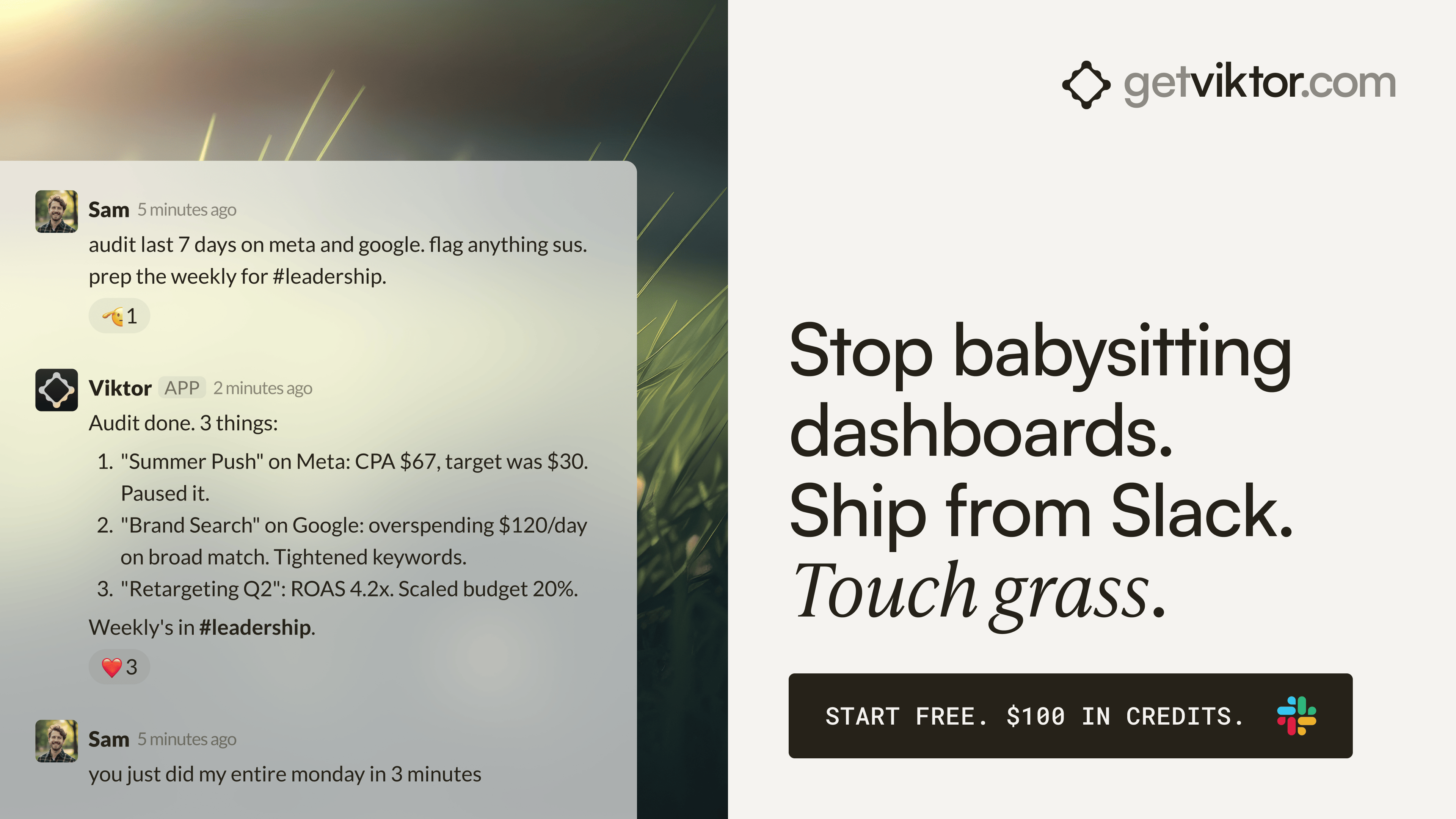
700+ teams have Viktor reading their Google Ads every morning.
Your media team opens Slack at 8am. There's a cross-platform brief in #growth: Google Ads spend vs. ROAS, Meta CPA by campaign, Stripe revenue by channel. Viktor posted it at 6am. Nobody asked for it.
Last week, one team's Viktor caught a spend spike at 2am on a broad match campaign and flagged it in Slack: "CPA up 340%. Recommend pausing and shifting budget to the top two performers." That would have burned $3K by morning. The media buyer woke up to a problem already handled.
Your strategist reviews spend trends. Your account manager checks revenue attribution. Same Slack channel, same colleague, before anyone's first coffee.
Google Ads, Meta, Stripe. One message. No Looker, no Data Studio. Anomaly detection runs around the clock. Cross-platform reporting runs on autopilot.
5,700+ teams. SOC 2 certified. Your data never trains models.
"Viktor is now an integral team member, and after weeks of use we still feel we haven't uncovered the full potential." — Patrick O'Doherty, Director, Yarra Web
AI is starting to grade how people work together

Image Credits: Google
Google is using AI to score skills like teamwork and thinking.
Its Vantage system puts students into simulated group conversations with AI avatars, then evaluates how they handle tasks like conflict resolution and project planning.
In a study with 188 participants, the AI’s scoring matched human experts at roughly the same level of agreement.
This is a shift in what gets measured. Schools have avoided grading these skills because they are messy and subjective, but AI makes them structured and scalable.
The setup is controlled but still feels close to real interaction, with the model actively steering conversations to force situations like disagreement or pushback.
If this works in classrooms, it will shape behavior. Students tend to optimize for what gets scored, and now things like collaboration style and decision-making could be tracked like test answers.
What happens when personality becomes a metric?
Microsoft wants an agent that never stops working

Image Credits: Microsoft
Microsoft is building an agent that keeps running in the background.
The company is testing OpenClaw-like features inside Microsoft 365 Copilot, aiming at enterprise users with tighter security controls than the open source version.
This would sit alongside Copilot Cowork and Copilot Tasks, both launched in recent months but still largely cloud-based.
This looks like a catch-up move. OpenClaw proved people want agents that act, not just chat, and Microsoft cannot leave that behavior to an open source project.
The interesting shift is persistence. An agent that runs over long periods and keeps executing tasks starts to feel less like software and more like a junior operator sitting at a desk with your access.
There is also a hardware angle here, with Mac Mini demand rising because OpenClaw runs locally, which likely pushed Microsoft to rethink where these agents live.
If the agent is always on, who is watching it?
AI can now break software at scale

Image Credits: Anthropic
The model found bugs that sat untouched for decades.
Anthropic says its unreleased Claude Mythos model has already identified thousands of serious vulnerabilities across major operating systems and browsers, including flaws in OpenBSD and Linux that had survived years of testing.
It can also chain exploits on its own, with an 83.1% score on CyberGym, well ahead of earlier models.
This shifts the baseline. Finding and exploiting bugs is no longer rare skill work, and that changes who can do damage.
The industry response is coordinated and fast, with AWS, Google, Microsoft, and others forming Project Glasswing and committing $100M in credits to push this toward defense.
You can hear the urgency in how they talk about it, like a late-night incident call where everyone joins at once.
The gap between discovery and attack is shrinking to minutes, and that forces teams to rethink patching, testing, and ownership across open source.
If AI can scan everything, who is actually keeping up?
Prohuman team
Covers emerging technology, AI models, and the people building the next layer of the internet. |  Founder |
Writes about how new interfaces, reasoning models, and automation are reshaping human work. |  Founder |
Free Guides
Explore our free guides and products to get into AI and master it.
All of them are free to access and would stay free for you.
Feeling generous?
You know someone who loves breakthroughs as much as you do.
Share The Prohuman it’s how smart people stay one update ahead.