- The Prohuman
- Posts
- China’s AI is catching cancers early
China’s AI is catching cancers early
Plus: Event tech leans into AI visuals


Rimsha Bhardwaj, Hasan Toor & Ihtesham Haider
January 02, 2026
In partnership with

Hello, Prohuman
Today, we will talk about these stories:
An AI tool spots tumors doctors miss
AI photo booths come to events
Space data centers are getting serious talk
Your dream is ready. Are you?

What if you woke up tomorrow with all your expenses covered for an entire year? No rent. No bills. What would you dream up? What would you build?
Our Dare to Dream challenge answers these questions. We believe in Creators, in Entrepreneurs, in the people who bet on their own ideas and their will to make them real.
That’s why we’re awarding $100,000 to one person who shows up as their authentic self and tells us how their dream can make a real difference in their communities.
We’ve got five runner-up prizes each worth $10,000, too. So get out your phone, hit record, and dream the dream only you can dream up.
Today is your day.
NO PURCHASE NECESSARY. VOID WHERE PROHIBITED. For full Official Rules, visit daretodream.stan.store/officialrules.
AI finds pancreatic cancer early
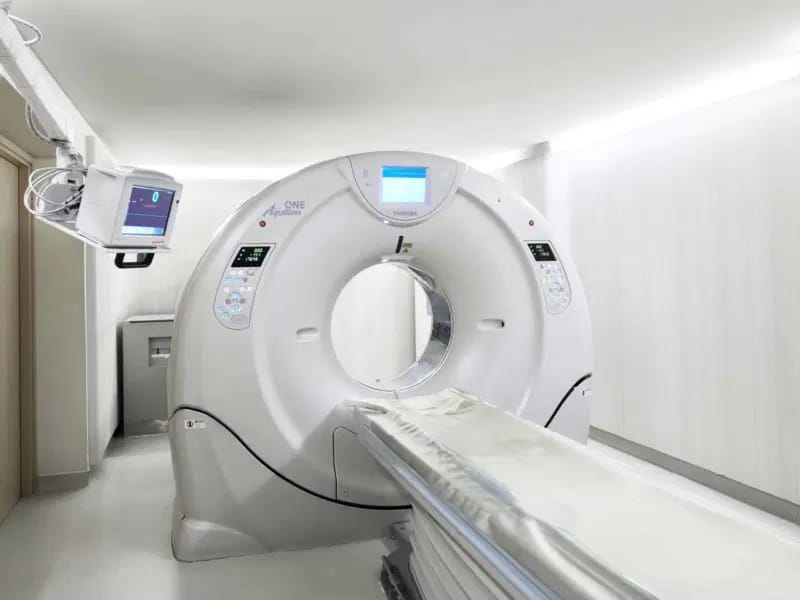
Image Credits: Echelon Health
A routine CT scan caught a cancer no one was looking for.
At a hospital in Ningbo, China, doctors are using an AI system called PANDA to scan ordinary, low-radiation CTs for pancreatic cancer. Since late 2024, it has reviewed more than 180,000 scans and flagged about two dozen cancers, including 14 early-stage cases that likely would have been missed.
This is one of the clearest examples yet of AI doing quiet, unglamorous medical work that actually changes outcomes. A 93 percent detection rate in trials is impressive, but the real story is scale, since China already runs millions of CT scans a year at about $25 each.
The trade-off is fear and follow-ups: about 1,400 alerts led to only 300 real concerns, stretching staff and patient trust. Still, in hospitals without enough specialists, this kind of system starts to look less like hype and more like basic infrastructure.
If software can quietly save lives like this, who decides where it gets deployed first?
AI moves into event photo booths

Image Credits: Pixsters
Event photo booths are turning into content machines.
A Los Angeles company called TikTok Photo Booth is rolling out AI-powered photo and video booths that turn guest captures into sketches, caricatures, and character-style visuals on the spot. The system is built for vertical video and short clips, aimed squarely at TikTok, Instagram Reels, and similar platforms.
This isn’t a tech breakthrough so much as a market signal about expectations. People now assume events will double as content factories, and vendors are responding with AI tools that feel fast, familiar, and low-friction rather than novel.
For brands, this becomes a cheap way to generate hundreds of branded posts in a single night. For guests, it raises the bar, since a plain photo booth already feels dated when AI versions show up instantly on a phone screen.
Once every event produces shareable content by default, what actually counts as memorable anymore?
Data centers might leave Earth
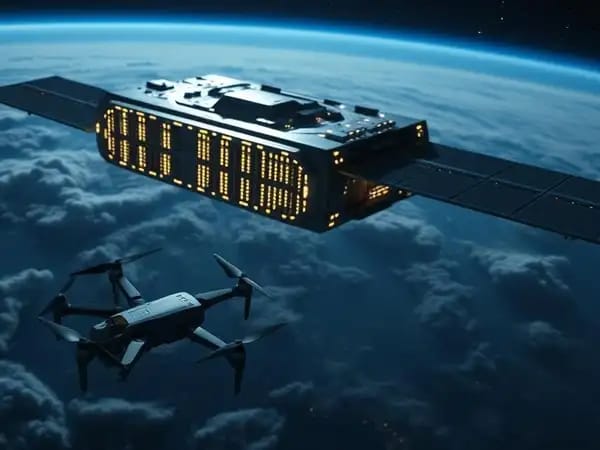
Image Credits: The Economic Times
Some AI leaders think land and power are running out.
Google says it will test a space data center project in 2027, and Elon Musk claims training advanced AI will be cheaper in orbit within five years. The pitch is simple: nonstop solar energy, fewer regulations, and no local pushback, even as OpenAI alone commits $1.4 trillion to data center buildouts on Earth.
This reads less like a plan and more like pressure venting from an industry that keeps promising scale without limits. The physics and costs still look brutal, with launches at about $2,000 per kilogram today and servers weighing over 1,000 kilograms each.
If launch costs really drop toward $200 per kilogram in the 2030s, some version of this could move from talk to pilot projects. Until then, space data centers mostly signal how boxed in big AI players feel by energy grids, water shortages, and local politics back home.
When the answer to growth is orbit, it’s worth asking what got ignored on Earth.
Prohuman team
Covers emerging technology, AI models, and the people building the next layer of the internet. |  Founder |
Writes about how new interfaces, reasoning models, and automation are reshaping human work. |  Founder |
Free Guides
Explore our free guides and products to get into AI and master it.
All of them are free to access and would stay free for you.
Feeling generous?
You know someone who loves breakthroughs as much as you do.
Share The Prohuman it’s how smart people stay one update ahead.