- The Prohuman
- Posts
- Alexa+ can now make podcasts
Alexa+ can now make podcasts
Plus: Dell and Nvidia sell the AI factory


Rimsha Bhardwaj, Hasan Toor & Ihtesham Haider
May 19, 2026
Hello, Prohuman
Today, we will talk about these stories:
Amazon turns Alexa into a podcast host
Nvidia pushes AI deeper on premises
Blackstone moves deeper into AI cloud
Alexa+ starts making the media
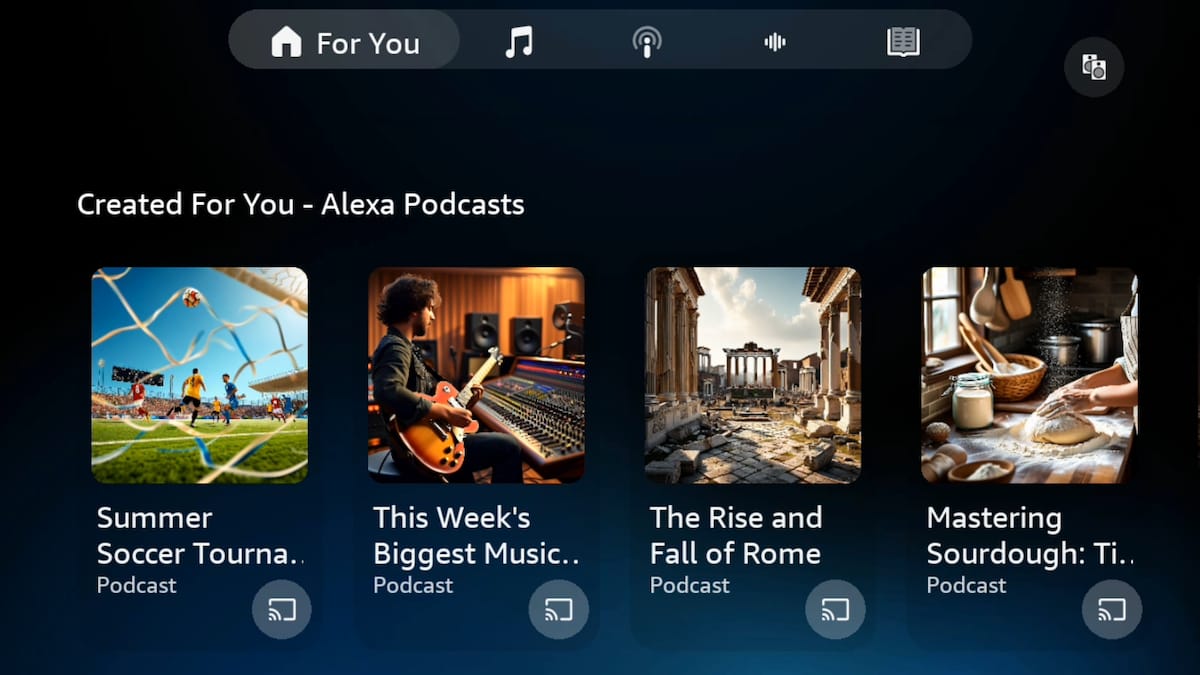
Image Credits: Amazon
Amazon now lets Alexa+ turn a random question into a podcast episode.
The new “Alexa Podcasts” feature is rolling out in the U.S. and can research a topic, draft an outline, and narrate an episode with AI-generated host voices. Users can adjust the length, tone, and focus, then replay the finished episode inside the Alexa app.
This is useful on paper. It also makes me uneasy, because a podcast sounds finished even when the research behind it may be thin or wrong. Amazon is leaning on partnerships with Reuters, AP, The Washington Post, and more than 200 local newspapers, which helps, but it does not solve the trust problem by itself.
The bigger shift is that Alexa+ is moving from answering commands to producing media on demand. That could train people to expect personalized audio for everything, from news briefings to work documents, while real podcasters compete with a voice coming from the kitchen counter.
Will people check what it says?
Enterprise AI moves into the server room
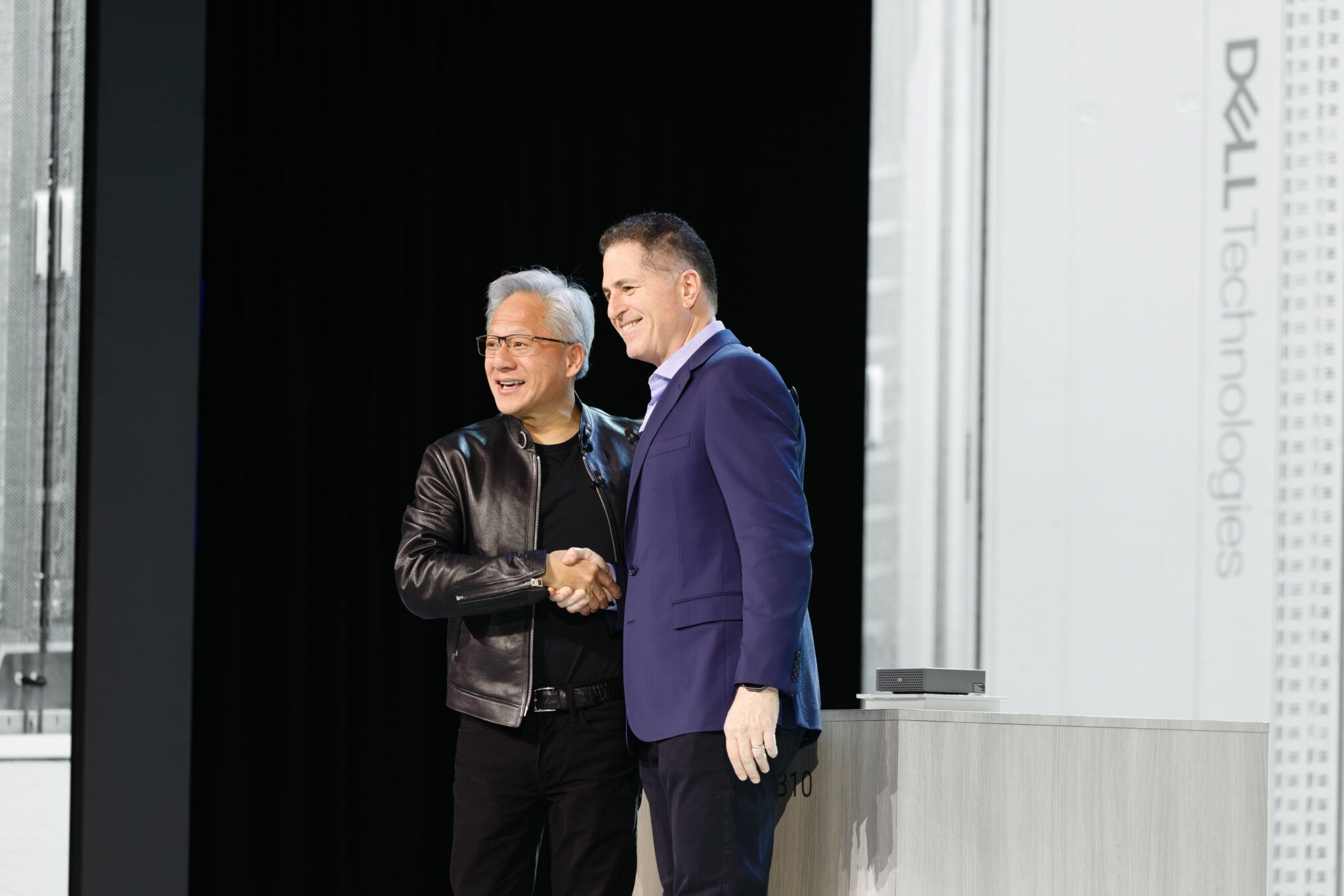
Image Credits: NVIDIA
Jensen Huang told Dell’s crowd that AI demand is “utterly parabolic.”
Dell and Nvidia used Dell Technologies World to expand the Dell AI Factory with Nvidia, covering deskside workstations, data center racks, networking, CPUs, models, and security. Dell said 5,000 enterprises already run AI workloads on the platform, and AI infrastructure spending could reach $3 trillion to $4 trillion by 2030.
This is a sales pitch, clearly. But it also shows where enterprise AI is headed as companies move from small pilots to heavier inference and agent workloads.
The strongest part is the on-premises push, because regulated firms want control over data, models, costs, and latency before they let agents touch real systems.
The practical fight now sits in power, cooling, memory bandwidth, and trusted deployment, with liquid-cooled racks humming under bright conference lights. If Dell and Nvidia are right, the AI stack will look more like enterprise infrastructure buying than software experimentation.
The question is how many companies can actually operate it well.
Blackstone wants the AI plumbing
Image Credits: Google
Blackstone is putting $5 billion behind a new Google-linked AI cloud company.
The joint venture will rent out data center capacity, networking, operations, and Google Cloud TPUs as a compute-as-a-service product.
Its first 500 megawatts of power are expected online by 2027, with Blackstone set to be the majority shareholder.
This is finance moving closer to the server rack. Google gets another channel for TPUs, while Blackstone gets hard assets tied to demand that still looks bigger than the supply available. I think the important part is the structure: AI cloud capacity is becoming something private capital can package, fund, and scale.
That puts more pressure on Nvidia’s position, since Google and Amazon are both trying to rent out their own chips. It also means the AI race is drifting into power, land, cooling, and long contracts, where firms like Blackstone are very comfortable.
The open question is who carries the risk if demand cools.
Prohuman team
Covers emerging technology, AI models, and the people building the next layer of the internet. |  Founder |
Writes about how new interfaces, reasoning models, and automation are reshaping human work. |  Founder |
Free Guides
Explore our free guides and products to get into AI and master it.
All of them are free to access and would stay free for you.
Feeling generous?
You know someone who loves breakthroughs as much as you do.
Share The Prohuman it’s how smart people stay one update ahead.