- The Prohuman
- Posts
- AI slop is making real money on YouTube
AI slop is making real money on YouTube
Plus: Indian films move fast, YouTube fills with junk, and enterprise AI resets its timeline


Ihtesham Haider, Hasan Toor & Rimsha Bhardwaj
December 29, 2025
In partnership with

Hello, Prohuman
Today, we will talk about these stories:
Indian cinema is moving faster with AI
The algorithm is feeding new users junk
Why 2026 is the new promise year
Banish bad ads for good
Your site, your ad choices.
Don’t let intrusive ads ruin the experience for the audience you've worked hard to build.
With Google AdSense, you can ensure only the ads you want appear on your site, making it the strongest and most compelling option.
Don’t just take our word for it. DIY Eule, one of Germany’s largest sewing content creators says, “With Google AdSense, I can customize the placement, amount, and layout of ads on my site.”
Google AdSense gives you full control to customize exactly where you want ads—and where you don't. Use the powerful controls to designate ad-free zones, ensuring a positive user experience.
Why Indian filmmakers are betting on AI
A 75-minute Indian film was made mostly by AI.
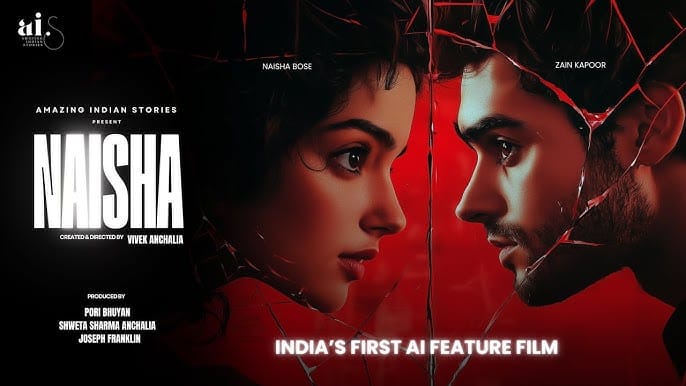
Indian filmmakers are using tools like ChatGPT, Midjourney, Stable Diffusion, and AI sound software across writing, pre-visualisation, de-ageing, dubbing, and post-production. One recent film, Naisha, was made with a budget under 15% of a standard Bollywood production, with about 95% of its footage generated using AI tools.
What stands out is how practical the adoption feels. This is not a culture war about creativity. It is filmmakers trying to finish films faster, cheaper, and with fewer gatekeepers, often working late at night on laptops instead of on crowded sets.
I think India’s fragmented, multilingual film economy makes AI attractive because it reduces coordination pain more than it replaces talent.
The risk is cultural flattening. Multiple directors point out that AI struggles with local myth, language texture, and emotional detail, which still forces humans back into the loop. Legal protections for voices, faces, and jobs are also lagging, which feels unsustainable as usage spreads.
If AI keeps lowering the cost of making films, the harder question is who controls what gets copied, reused, and remembered.
YouTube’s algorithm is rewarding AI slop

A Kapwing study found that 104 of the first 500 videos shown to a brand-new YouTube user were AI slop. Across the platform, 278 major channels now post nothing else, pulling in 63 billion views, 221 million subscribers, and an estimated $117m a year.
This is not fringe behavior. The algorithm is actively promoting low-effort, AI-generated videos because they keep people watching, often without sound, late at night, phone glowing in the dark.
What bothers me is how little creativity matters here. Success comes from volume, weirdness, and copying what already works, not from making something good.
The money is flowing mostly to creators in middle-income countries where even a small YouTube payout beats local wages, while scammers sell courses promising shortcuts. Platforms say they want quality, but their systems reward scale and repetition.
If one-fifth of a new user’s feed is already slop, the real question is how much worse it gets once the algorithm learns what you’ll tolerate.
Enterprise AI payoff keeps getting delayed
Three years after ChatGPT kicked off the enterprise AI boom, an MIT survey still shows 95% of companies aren’t seeing meaningful returns. Despite that, 24 enterprise-focused VCs told TechCrunch that 2026 will be the year AI budgets rise, tools consolidate, and real value finally shows up in daily workflows.
What struck me is how familiar this sounds. Investors have been predicting the breakthrough year since 2023, even as most enterprises admit they are still experimenting, duplicating tools, and struggling to get pilots into production.
The difference this time is narrower ambition. VCs are no longer pitching magic models. They are talking about fewer vendors, boring infrastructure, vertical software, and tools that survive security and procurement reviews.
If they’re right, many AI startups won’t make it. Budgets may grow, but they will concentrate around a small set of products that are embedded deeply enough to be painful to remove. Everything else gets cut.
The open question is whether 2026 delivers real enterprise change, or just a better story for explaining why it still hasn’t.
Prohuman team
Covers emerging technology, AI models, and the people building the next layer of the internet. |  Founder |
Writes about how new interfaces, reasoning models, and automation are reshaping human work. |  Founder |
Free Guides
Explore our free guides and products to get into AI and master it.
All of them are free to access and would stay free for you.
Feeling generous?
You know someone who loves breakthroughs as much as you do.
Share The Prohuman it’s how smart people stay one update ahead.